
The Lab: Gone in Sixteen Seconds
May 14, 2026 | 3 min read
In partnership with Mind the Gap, we surveyed 19,470 likely voters to find the optimal length of a political ad. We tested spots from 6 to 60 seconds. We expected diminishing returns. We didn't expect the curve to flatline at 15 seconds.
Here’s a story about two advertisements from nearly twenty years ago.
I can’t believe I have ancient political knowledge but I guess I do because this fact would now be eligible to vote in the midterm: in 2008, Barack Obama had more money than he knew what to do with and was crushing John McCain in fundraising because McCain took public funding and Obama turned on the Dem donor spigot. Feeling like they had to do something with all the money, the campaign spent over $6 million to put a 30 minute infomercial on major networks in the week leading up to the election.
In 2006, another ad appeared on my television, typically before final Jeopardy! And it went like this: Head on, apply directly to the forehead. Head on, apply directly to the forehead. Head on, apply directly to the forehead. That was it. Twenty years later, as one short video puts it, this ad is directly seared into Millennial brains.
Head On in fact violated one main thing we’ve confirmed about advertising effectiveness here at Tavern: new information persuades. The ad provided no information, and information is what persuades voters. They had so much attention but did not do anything with it. On the other hand, I remember absolutely nothing about the Obama infomercial. The Obama campaign made a number of great decisions and far be it from us to suggest they made mistakes. But they should not have done this, and should have taken a more, er, head on approach. Our research at Tavern suggests the Obama infomercial was too long by a factor of about 240.
To test the optimal length of ads, we created ads for fake candidates in the manner Tavern knows to be persuasive using our methods, like using subtitles on every ad that we do, and measured the treatment on candidate support while varying the length of the ads to assess how much the duration of an ad impacts vote choice. We also tested whether this effect held if you did two ads on different topics back-to-back.
There is essentially no persuasion after 15 seconds. And this holds even if you add a novel topic to your ad for the same candidate, which was genuinely surprising to me given we know new information is what persuades voters. We’ve answered the political equivalent to whether you’d want to fight 100 duck sized horses or 1 horse sized duck. Spend your money on 100 duck sized horses. Every additional second over 15 does not appear to be worth it. We know that the impact of political ads decay fast, which means drop the length, up the volume.
Nearly all persuasion occurs within 15 seconds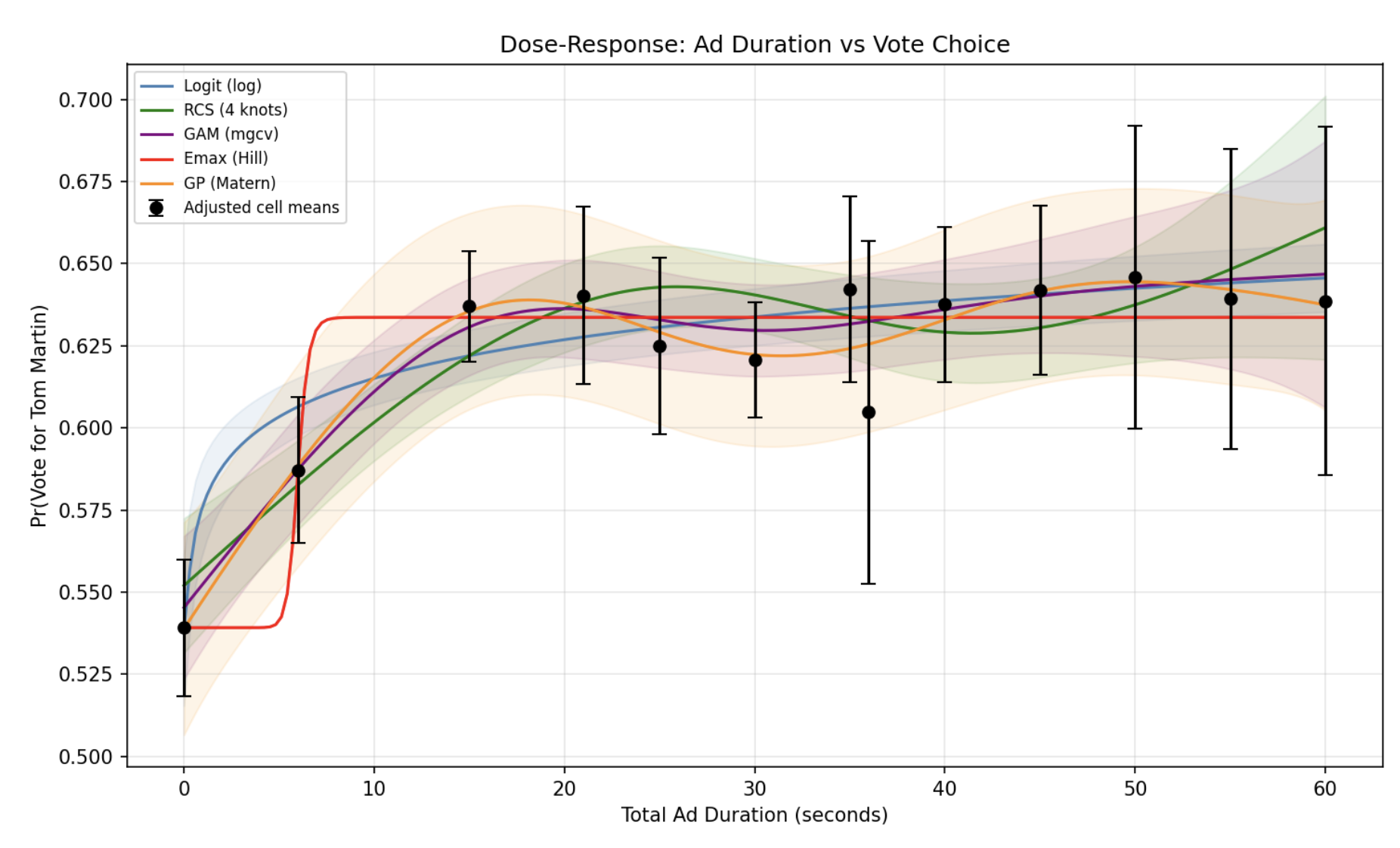
Advertising has an overall treatment effect of 9pp, confirming that information provision works. The vast majority of that gain comes in the first 15 seconds.
Favorability confirms the same plateau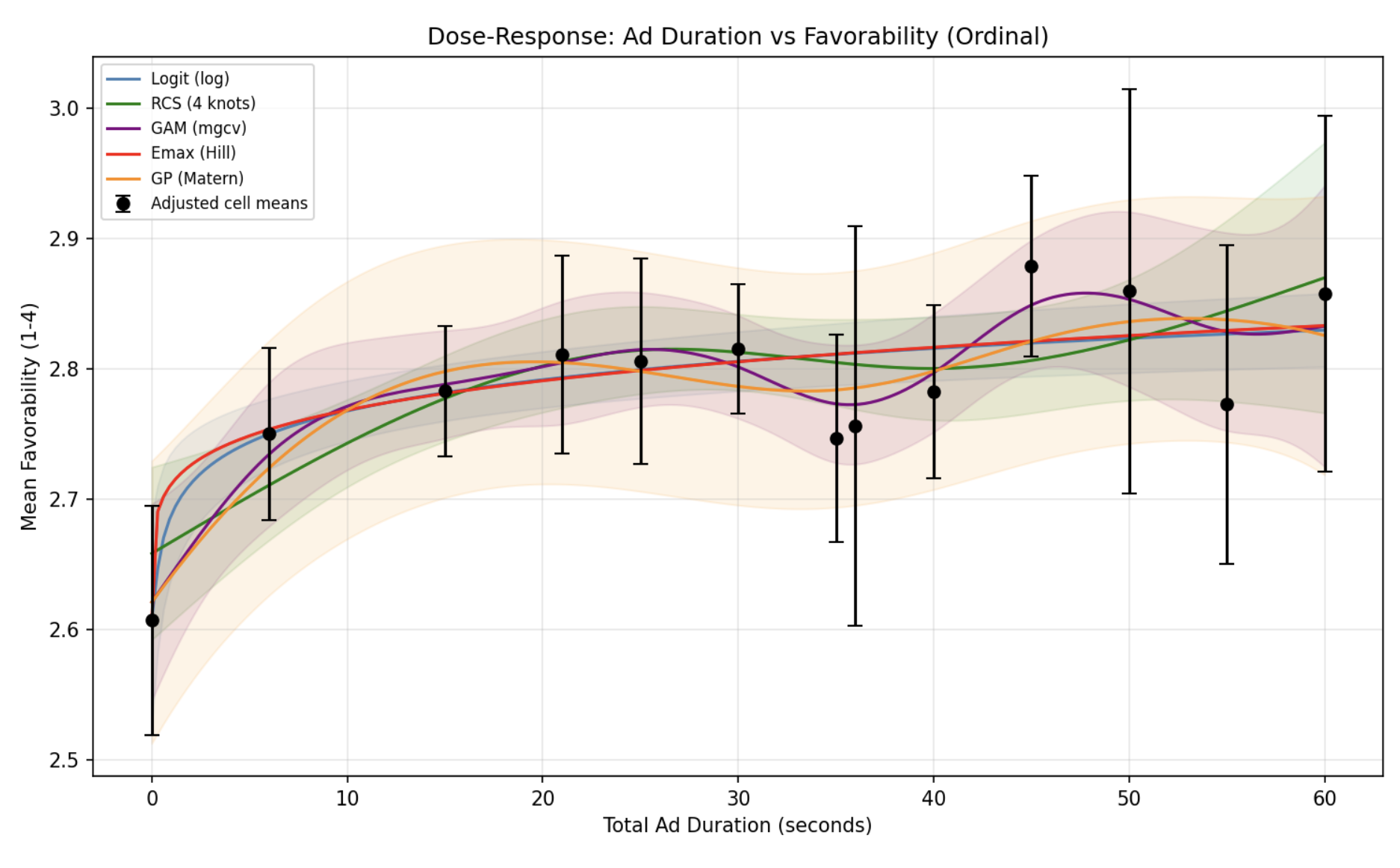
Additional gains in candidate favorability diminish along the same pattern.
We’re answering questions like this all the time, adding to our body of knowledge, and turning it into improvement after improvement in the effectiveness of campaign spend.
Want the deck summarizing findings, including methodology and the direct-to-camera findings? → Download the PDF here
